Planning a Land and Sea Safari from Zanzibar
For many travelers, the idea of an African safari conjures images of vast savannahs, acacia trees, and big cats lounging in the sun. What sometimes gets overlooked is the possibility of blending that classic wildlife experience with a tropical beach stay. Zanzibar, the spice island off the coast of Tanzania, offers exactly that combination. Its powder-white beaches and turquoise lagoons sit just a short flight away from some of the most famous game parks on the continent.
The key question is how to make the most of both worlds without overcomplicating the trip. A safari from Zanzibar is not a theoretical option; it is a practical reality that many tour operators have refined over years. The logistics are straightforward, the time commitment is manageable, and the payoff is a holiday that delivers both relaxation and adventure.
How a Fly-In Safari Works
The most common way to combine Zanzibar beach and safari is through a fly-in arrangement. You spend several days on the coast of Zanzibar, then take a short scheduled or charter flight from Zanzibar to an airstrip near one of the northern parks, usually the Serengeti National Park or Ngorongoro Crater. The flight itself takes around an hour and a half, which saves what would otherwise be a full day of driving plus a ferry crossing.
Once you land, a vehicle and guide meet you at the airstrip. Game drives begin that same afternoon. You stay in a lodge or tented camp inside or just outside the park, then fly back to Zanzibar after two or three days of wildlife viewing. The entire safari segment can be as short as two nights or as long as a week, depending on your schedule and budget.
This model works well because it avoids the long overland transfer from the coast to the interior. It also means you do not have to pack and repack for a road journey. You leave your main luggage at the beach hotel and take only a small bag for the safari. When you return, you step straight back onto the sand.
What You See on a Serengeti Safari
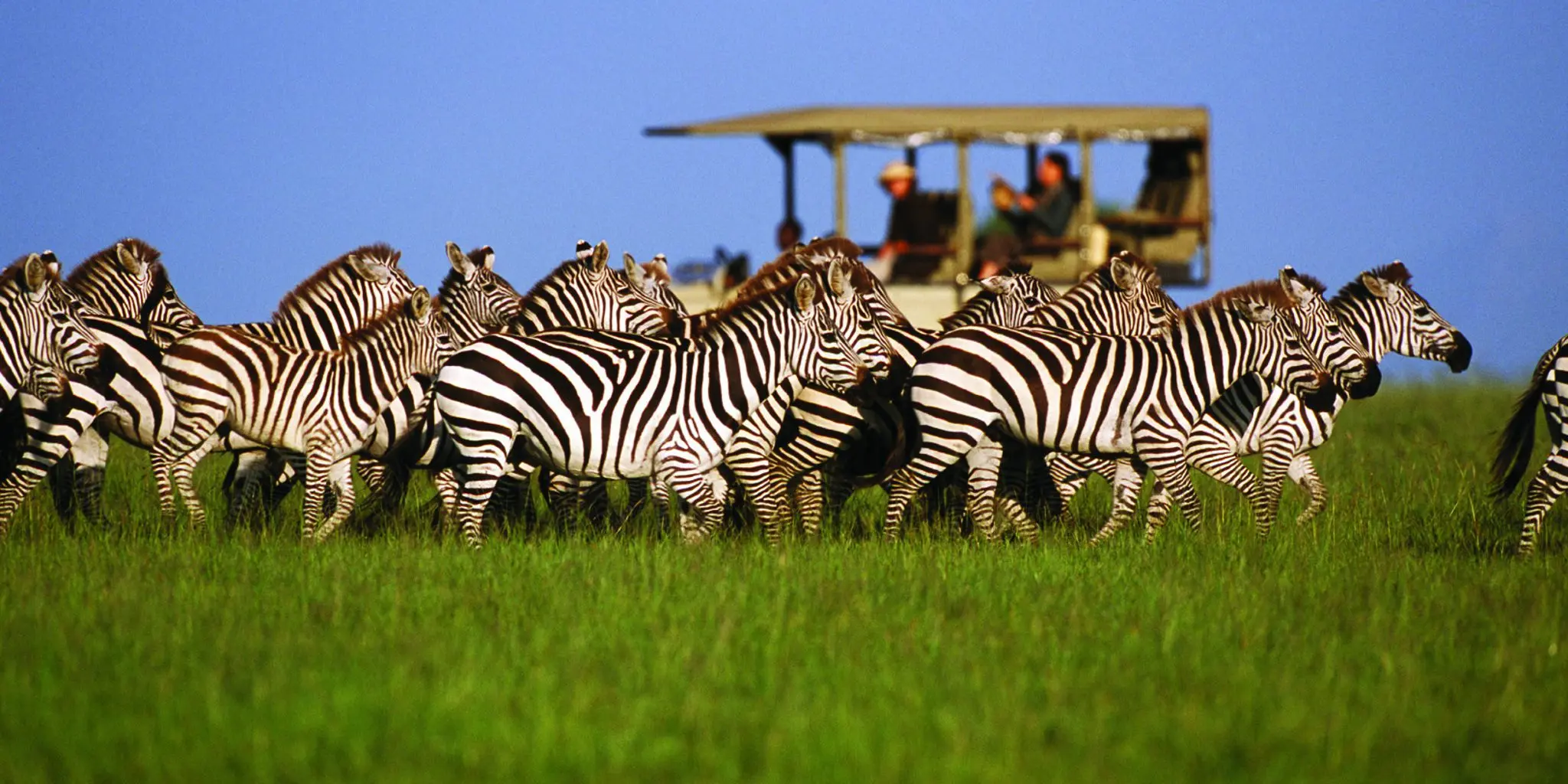
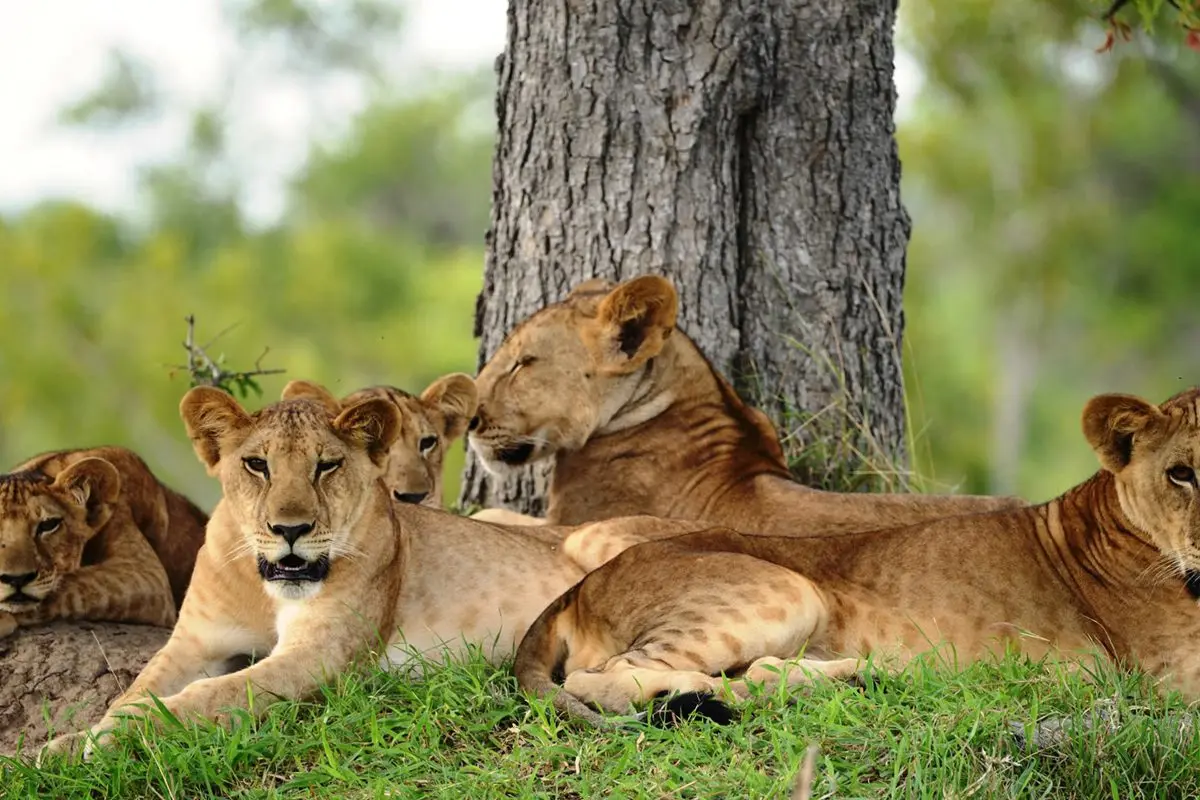
The Serengeti ecosystem is one of the last places on earth where large mammal migrations still happen on an ancient scale. Depending on the season, you may witness wildebeest and zebra herds stretching across the plains, river crossings where crocodiles wait, or predators such as lions, cheetahs, and leopards hunting in the open grasslands. The park is also home to giraffes, elephants, hippos, and more than five hundred bird species.
Game drives typically start at sunrise, when animals are most active, and continue until late morning. After a break for lunch and rest, a late afternoon drive takes you out again until dusk. Night drives are usually not permitted inside the park itself, but some lodges on the borders offer guided night excursions with spotlights to find nocturnal species like hyenas, genets, and bush babies.
A tailor-made safari allows you to focus on what interests you most. If birdwatching is your priority, your guide can spend more time in acacia woodlands and wetlands. If you are hoping to see a cheetah hunt, you can request a guide who specializes in predator tracking. The flexibility is one of the main advantages of booking a private or small-group tour rather than a fixed itinerary.
Balancing Beach Time with Wildlife Viewing
The trick to a successful combined trip is deciding how to split your days. A common pattern is to spend the first half of your holiday on Zanzibar, relaxing and recovering from jet lag, then fly to the safari region for the middle portion, and return to the beach for the final days. That way you end the trip with downtime rather than a rushed departure.
Another approach is to start with the safari, then fly to Zanzibar for a beach wind-down. This sequence works particularly well if you are traveling from a country with direct flights to Kilimanjaro or Arusha, because you can begin the safari immediately without backtracking. Once the safari ends, you fly to Zanzibar, spend a few days on the coast, and fly home from Zanzibar's international airport.
Either way, the total travel time remains efficient. The flight between the beach and the park is short, and the airports on both ends are small and easy to navigate. You are not wasting days in transit.
What to Expect on Zanzibar
Zanzibar's eastern and northern coasts offer the calmest swimming conditions, with coral reefs protecting the lagoons. The island has accommodations ranging from simple guesthouses to all-inclusive resorts, so there is a fit for most budgets and travel styles. Stone Town, the historic center, is worth a day for its narrow alleys, old fort, and spice markets, but most visitors spend the bulk of their time on the beach.
The phrase Zanzibar beach and safari refers to a specific kind of holiday design. It is not about two separate trips stitched together. It is about a single itinerary that treats the beach as the base and the safari as an excursion, or treats them as equal halves of a single journey. The logistics are intentionally seamless: your operator handles the flights, transfers, and park fees, so you do not need to coordinate separate bookings.
That seamlessness matters because it protects your relaxation. If you had to arrange the internal flight, the park entry, the accommodation, and the transfers yourself, you would spend hours on the phone and email. With a pre-arranged fly-in safari, you simply show up at the Zanzibar airport with your small bag and board the plane. Everything else is waiting for you at the other end.
Choosing the Right Time of Year
Timing affects both the beach and the safari experience. The dry season from June to October offers the best wildlife viewing in the Serengeti because animals gather around water sources and vegetation is sparse, making them easier to spot. This period also coincides with the wildebeest calving season from January to March in the southern Serengeti, and the river crossings from July to October in the north.
Zanzibar enjoys warm weather year-round, but the long rains from March to May and the short rains in November can bring clouds and humidity. The driest and sunniest months on the island are June through October, which aligns well with prime safari conditions. If you travel during the green season, you will see the parks at their most lush and the beaches will be quieter, but some game drives may involve wet roads.
What to Pack for a Combined Trip
Packing for both a beach and a safari requires some thought. The key is to bring lightweight, neutral-colored clothing for the bush, and swimwear, light cottons, and sun protection for the coast. A single small duffel or backpack for the safari portion is practical because lodges usually have laundry service. On Zanzibar, you will want reef-safe sunscreen, a hat, and insect repellent. In the Serengeti, a warm fleece or jacket is essential for early morning game drives, even in the dry season.
Binoculars, a camera with a zoom lens, and a power bank for charging devices are useful on safari. On the beach, a good book and a snorkel mask are enough. The contrast between the two environments is part of the appeal. One day you are watching lions stalk zebras, and the next you are floating in warm turquoise water. The shift is refreshing rather than jarring.

Final Considerations
Combining a Zanzibar beach and safari is not a compromise. It is a deliberate choice to experience two distinct landscapes within a single trip. The infrastructure exists to make it smooth, the timing can be tailored to your preferences, and the memory of walking from your beachfront bungalow to a game drive across the Serengeti is something that stays with you long after you return home.
The main thing to keep in mind is that a combined tour requires planning. You cannot simply book a flight to Zanzibar and hope to arrange a safari on arrival. But with a reputable operator who understands the logistics of fly-in safaris from Zanzibar, the process becomes straightforward. You decide the dates, the balance of days, and the style of accommodation, and the rest falls into place.
For anyone who has ever dreamed of seeing a leopard in the wild and then dipping their toes into the Indian Ocean the same week, this style of travel is worth considering. It delivers the best of both regions without the hassle of overland travel or the stress of self-coordination.
Corrections
Spot something wrong? Send it to the desk and it gets fixed in the open.